



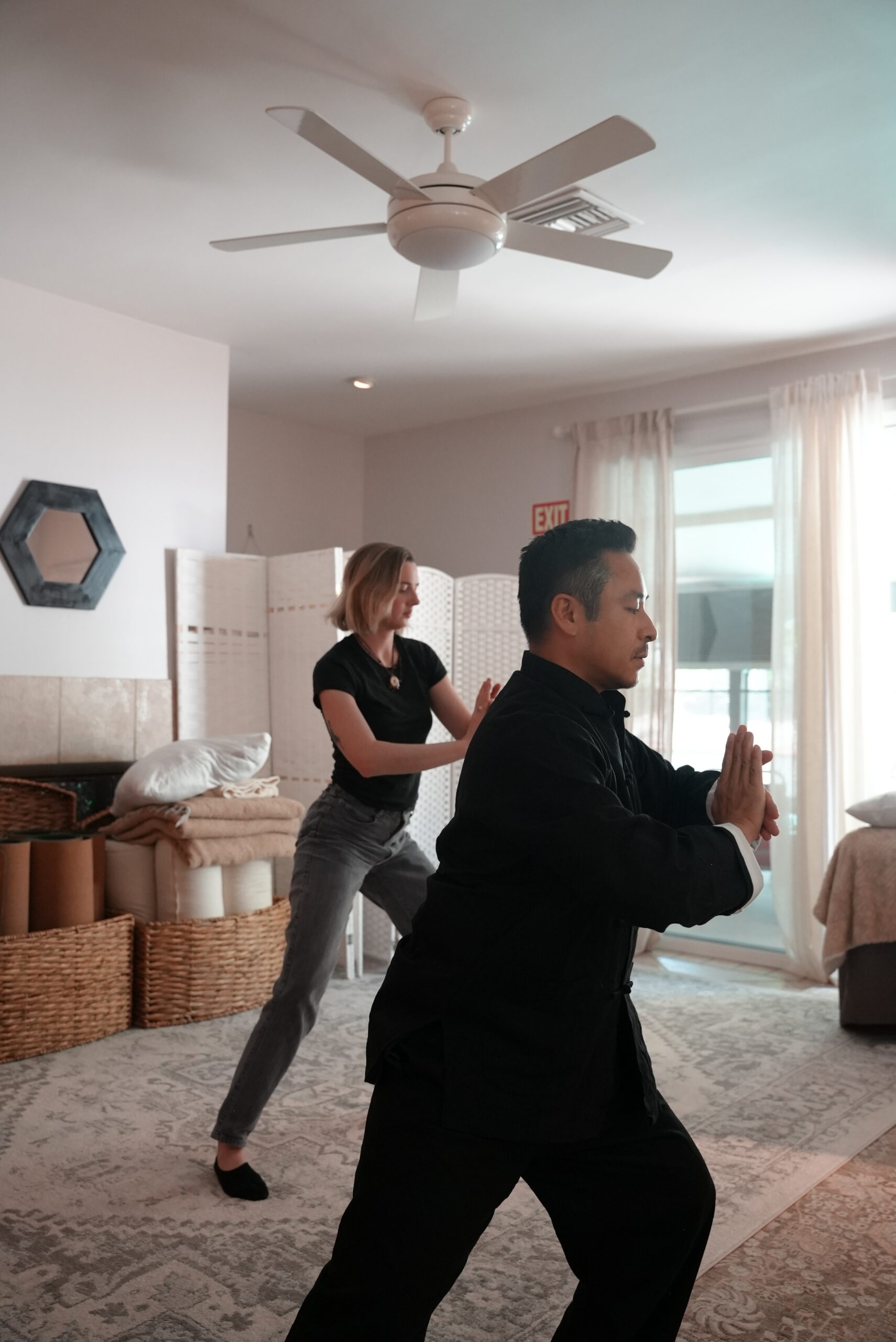
Somatic therapy in residential treatment gives the body a direct role in healing trauma, burnout, and chronic stress. At Highlands in Bloom (HiB), it forms the backbone of daily clinical care. Many people arrive having already tried talk therapy, medication, and wellness strategies, yet still feel stuck. The reason is rarely a lack of effort. More often, the nervous system has never had a chance to fully process what happened. Somatic therapy addresses this gap by working with the body’s physiological responses to stress, not just the thoughts and narratives surrounding them.
This post explains what somatic therapy is, why it belongs inside a residential program, and how Highlands in Bloom integrates it into daily care for high-functioning adults in California.
What Is Somatic Therapy?
Somatic therapy is a body-centered approach to mental health treatment. The word “somatic” comes from the Greek soma, meaning body. Rather than focusing on cognitive reframing alone, it draws attention to physical sensations, movement, breath, and posture as entry points into the nervous system.
This distinction matters because trauma, chronic stress, and burnout do not live only in memory. Research from clinicians like Dr. Bessel van der Kolk, whose landmark work The Body Keeps the Score informs much of the modern trauma field, shows that unresolved trauma gets stored in the body. Muscle tension, shallow breathing, fatigue, and hypervigilance all signal that the nervous system remains in a state of chronic activation. Talking about an experience does not always resolve the physical imprint it leaves behind.
To address this, somatic therapy uses structured techniques to help the nervous system complete the stress cycle and return to a regulated baseline. Several approaches fall within this framework.
Somatic Experiencing (SE): Developed by Dr. Peter Levine, this method guides clients to track bodily sensations and gradually discharge stored survival energy that never found a natural release.
Sensorimotor Psychotherapy: This approach combines talk therapy with attention to posture, movement, and physical impulses to process trauma held in the body rather than in conscious memory alone.
Breathwork: Regulated breathing practices directly influence the autonomic nervous system, helping shift the body out of fight-or-flight and into a more settled state.
Movement-based therapy: Structured physical movement helps release long-held tension, restore body awareness, and support emotional processing in a non-verbal way.
At Highlands in Bloom, somatic movement is not optional enrichment. Every client participates in 1.5 hours of somatic movement daily as a required component of the clinical program. Healing the nervous system demands consistent, repeated engagement, and the daily structure reflects that understanding.
Why Somatic Therapy Belongs Inside Residential Treatment
Outpatient therapy, even high-quality weekly sessions, can only go so far when nervous system dysregulation runs deep. A 50-minute session once a week may help a person understand their patterns intellectually. Even so, the body needs repetition, consistency, and sustained safety to truly reorganize.
Residential treatment creates the conditions somatic therapy requires to work at its fullest depth. Living within the program means clients engage with body-based practices every single day. Over time, this daily immersion recalibrates the nervous system’s set point. Through experience rather than insight alone, the body learns that it is safe. This shift is gradual and cumulative, and it rarely happens effectively in a once-a-week outpatient setting for those with significant trauma or burnout histories.
Several features of the residential setting make it uniquely suited to somatic work.
Removal from daily triggers is foundational. Stepping away from the workplace, relational stressors, and overstimulating environments gives the nervous system genuine room to settle. Somatic work reaches deeper when the body is no longer re-activating its survival response between sessions.
Consistency builds safety in ways that cannot be replicated elsewhere. The same structure, the same clinicians, and the same physical environment each day signal safety to the nervous system. Predictability is itself therapeutic for someone whose system has been dysregulated for years.
Built-in integration time is another critical factor. After a somatic session, clients have time to rest rather than rushing back to a demanding schedule. This consolidation period is where much of the lasting healing takes root.
Multidisciplinary reinforcement ensures somatic work does not exist in isolation. Individual therapy, group programming, nutrition, and movement all speak the same clinical language at Highlands in Bloom. What surfaces in a somatic session can be explored further with a therapist or in group that same day.
Nervous System Dysregulation: The Root of Burnout, Anxiety, and Trauma
Most individuals who enter residential treatment at Highlands in Bloom share a common underlying dynamic. Their nervous system has been running on high alert for far too long. Although this shows up differently from person to person, the physiological pattern beneath it is often the same.
Executives and high-functioning professionals often experience dysregulation as relentless productivity paired with exhaustion that sleep cannot fix. Trauma survivors may present with numbness, disconnection, or a persistent sense of watching life from a distance. People navigating autoimmune flares or chronic illness frequently describe a body that feels perpetually under attack regardless of what they do.
Beneath these varied presentations, the autonomic nervous system plays a central role. The sympathetic branch, responsible for fight-or-flight, activates in response to threat both real and perceived. Meanwhile, the parasympathetic branch, responsible for rest, digestion, repair, and connection, struggles to engage when the threat signal never fully turns off.
Chronic activation carries consequences beyond emotional distress. Sustained stress disrupts sleep, elevates inflammation, and impairs immune function. It also depletes the prefrontal cortex’s capacity for clear decision-making and emotional regulation. Rather than asking the mind to think its way through it, somatic therapy gives the body a direct pathway out of this cycle.
At Highlands in Bloom, the clinical team, led by a doctorate-level Clinical Director specializing in trauma, structures the entire day around nervous system support. Morning somatic movement activates the body gently and builds capacity for therapeutic work. Clinical programming deepens what movement initiates. Whole-food meals support gut-brain regulation, and evening routines wind the system down. Together, these elements train the nervous system toward regulation rather than activation.
How Somatic Therapy Works With Other Evidence-Based Modalities
Somatic therapy does not replace evidence-based clinical treatment. Instead, it deepens it. At Highlands in Bloom, somatic work runs alongside EMDR, CBT, and DBT within individualized treatment plans, with each approach reinforcing the others.
EMDR (Eye Movement Desensitization and Reprocessing) targets the reprocessing of traumatic memories. Clients who have developed somatic awareness alongside their EMDR work gain better capacity to tolerate the activation that trauma processing brings. This makes the work more accessible and more effective.
CBT (Cognitive Behavioral Therapy) helps clients identify and shift thought patterns that maintain anxiety and depression. Somatic grounding skills complement CBT by offering a physiological anchor when distress escalates during cognitive processing.
DBT (Dialectical Behavior Therapy) builds distress tolerance and emotional regulation skills for daily life. Body-awareness developed through somatic work makes DBT skills more accessible in real-world moments of intensity. It bridges the gap between knowing a skill and actually being able to use it.
Group therapy sessions also incorporate somatic awareness, helping clients notice how relational dynamics land in the body rather than only in the mind. Over time, this builds embodied self-awareness that supports lasting behavioral change well after discharge.
Somatic Therapy and Autoimmune Conditions
One of the ways Highlands in Bloom differs from conventional residential programs is its attention to the relationship between mental health and immune function. Many clients arrive with autoimmune conditions such as rheumatoid arthritis, Hashimoto’s thyroiditis, lupus, or inflammatory bowel disease. Chronic stress and unresolved trauma have often worsened these conditions significantly.
The research here is compelling. Chronic stress dysregulates the HPA axis, the body’s central stress response system. This disrupts immune regulation and increases systemic inflammation. For people with autoimmune conditions, unmanaged stress is not just a quality-of-life issue. It functions as a physiological accelerant that worsens symptoms and triggers flares.
Somatic therapy helps the body shift out of sustained sympathetic activation, which can reduce inflammatory burden and support immune regulation over time. Highlands in Bloom does not treat medical conditions directly. Even so, the program’s focus on nervous system regulation, trauma processing, and whole-body care creates conditions that consistently benefit clients experiencing stress-related physical symptoms.
Clients navigating autoimmune conditions receive programming that acknowledges both dimensions of their experience. Meaningful recovery requires addressing the whole person, not treating the mind and body as separate concerns.
What to Expect From Somatic Therapy at Highlands in Bloom
For most clients, somatic work feels unfamiliar at first. Many high-functioning individuals have spent years building strong cognitive defenses. Being asked to notice what the body feels rather than what the mind thinks can initially feel disorienting.
The clinical team guides this process carefully and at each client’s own pace. Somatic work is not about forcing emotional catharsis. Skilled somatic therapy expands the window of tolerance gradually, building resilience through repeated, titrated exposure to bodily experience rather than through intensity.
A typical day of somatic therapy unfolds across several formats. Morning movement sessions begin with breath-guided movement to warm and open the body, release overnight tension, and cultivate present-moment awareness. Through daily practice, clients learn to track physical sensation without judgment.
Later, individual somatic sessions let the therapist work directly with what is arising for that client. Together, they notice where tension lives, what movements the body wants to make, and where incomplete stress responses can finally find resolution. Group somatic work then builds co-regulation skills, which is the capacity to settle the nervous system in the presence of others. For those with relational trauma, this shared experience is itself deeply healing.
Is Somatic Therapy Right for You?
Body-based therapy offers meaningful benefits for almost anyone in residential treatment. It is particularly well-suited for those who have tried talk therapy without sustained relief, who experience anxiety or hypervigilance in the body, or who have chronic symptoms like tension, fatigue, or gut issues that have not responded to conventional care.
Consider somatic therapy if you have a trauma history that feels hard to approach through words, experience emotional numbness, or feel disconnected from physical sensation. High-functioning individuals who appear fine externally but feel exhausted internally are also strong candidates for this work.
Worth noting is that somatic therapy is not a replacement for psychiatric care or medication management. For many clients, it works best as one component of a broader, integrated treatment plan. That is precisely the kind of plan that residential treatment at Highlands in Bloom is designed to deliver.
Take the Next Step
If you or someone you love is experiencing burnout, trauma, anxiety, or stress-related physical symptoms that have not responded to outpatient care, residential treatment at Highlands in Bloom may be the right next step. Our admissions team offers confidential consultations and works with PPO insurance plans, including Blue Shield of California and Aetna. Call us today at (805) 892-6313 or request a consultation online at highlandsinbloom.com/contact.
The information in this post is for educational purposes only and does not constitute medical advice. Please consult a qualified mental health professional for guidance specific to your situation.
About Highlands in Bloom
Highlands in Bloom is a licensed residential mental health treatment center in Old Agoura Hills, California. Above all, the facility exists to serve high-functioning adults, including executives, professionals, caregivers, and leaders, navigating burnout, anxiety, depression, trauma, and stress-related autoimmune conditions. A founder who built this program from her own experience with autoimmune illness and professional burnout shapes every aspect of the facility’s philosophy and clinical approach. Highlands in Bloom holds DHCS and CDSS licenses, carries Joint Commission accreditation, and operates in-network with Blue Shield of California and Aetna.
Highlands in Bloom
Residential Treatment Center for Autoimmune + Mental Health
Agoura Hills, California
Highlands in Bloom holds a California Department of Health Care Services (DHCS) Mental Health Program Certification (#MHBT250527), a California Department of Social Services (CDSS) license (#195850591), and is accredited by The Joint Commission (HCO ID: 738662).